Bankroll Management Techniques for Multi-Table Poker Tournaments with Increasing Blinds
Written by Katja Friedrich · Aug 22, 2026
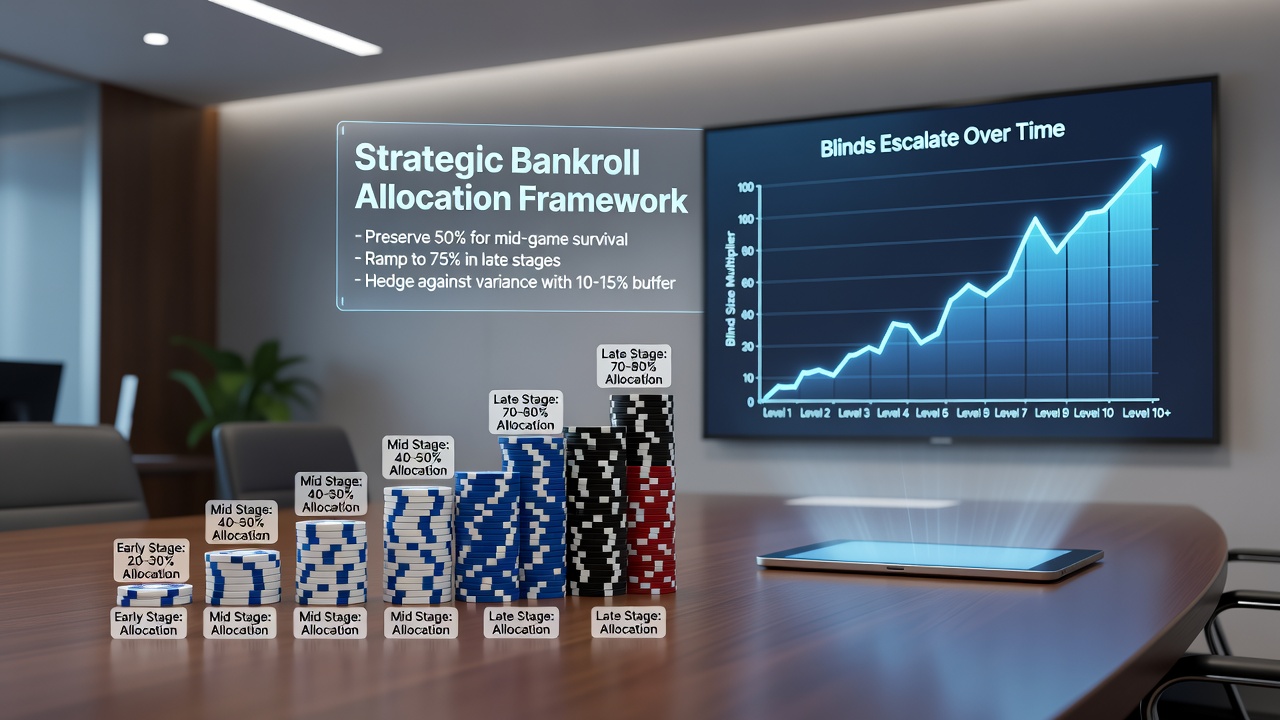
Bankroll Management Techniques for Multi-Table Poker Tournaments with Increasing Blinds
Multi-table poker tournaments present distinct challenges for bankroll allocation because escalating blinds compress decision windows and amplify variance across simultaneous tables. Participants allocate funds according to buy-in percentages that account for total entry costs plus potential rebuys or add-ons while maintaining reserves for future events. Data from tracking platforms shows that many players reserve between 50 and 100 buy-ins for a single major tournament series to absorb downswings that occur during blind increases.
Core Principles of Allocation in Escalating Structures
Blinds rise at fixed intervals and force action at every table so allocation models must factor in both the number of tables and the speed of level changes. Observers note that conservative approaches divide the overall bankroll into segments where 1 to 2 percent covers each individual tournament entry. This method leaves room for multi-table participation without exhausting resources during prolonged variance streaks that often appear after the third or fourth blind level.
Studies from gambling research centers indicate that players who pre-calculate total exposure across four or more tables reduce the likelihood of mid-series adjustments. Allocation therefore incorporates a buffer for travel or online platform fees while the core portion remains dedicated to buy-ins scaled to average field sizes reported in August 2026 tournament schedules.
Percentage-Based and Fixed-Unit Systems
Percentage-based systems tie each allocation directly to current bankroll size so adjustments occur automatically after wins or losses. Fixed-unit systems instead assign a constant dollar amount per tournament regardless of recent results. Research published through the University of Sydney's gambling studies unit demonstrates that percentage systems maintain participation rates more consistently during extended series because they scale naturally with bankroll fluctuations.
Those who combine both approaches often set a floor unit that never drops below a minimum buy-in level while allowing percentages to govern larger swings. This hybrid maintains access to mid-stakes events even after significant drawdowns that accompany aggressive blind increases in later tournament stages.
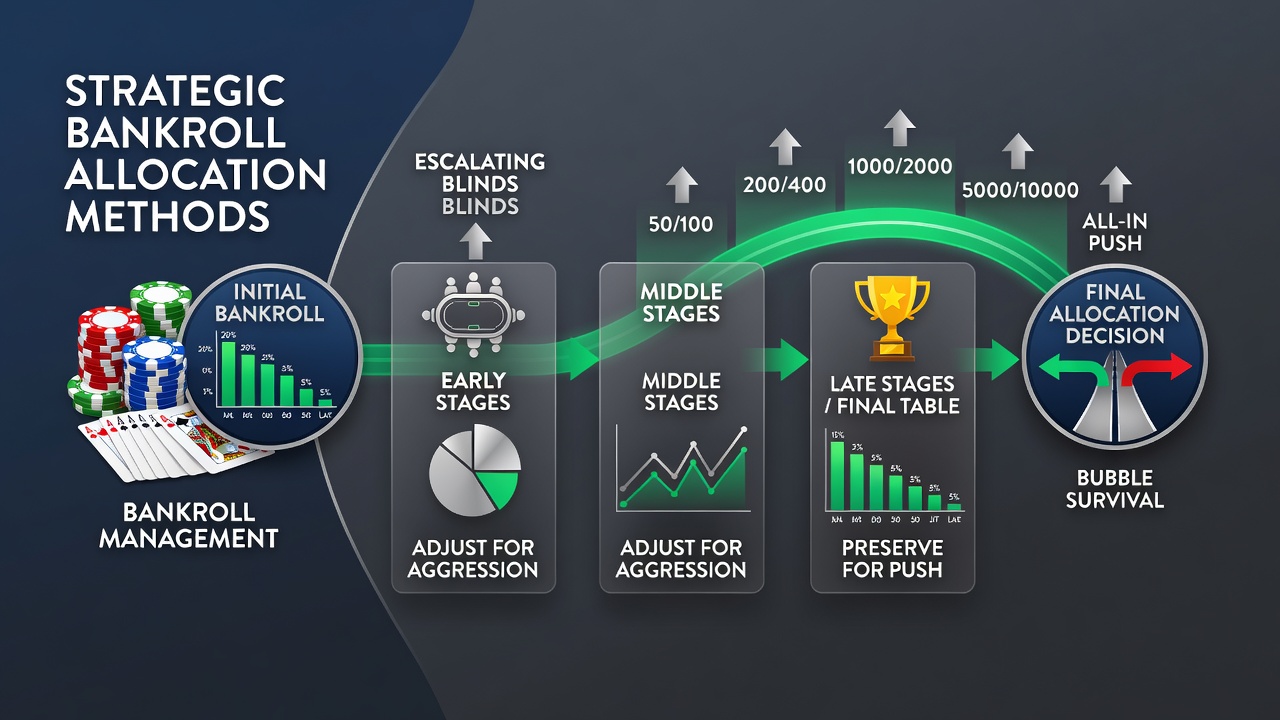
Adjusting for Multi-Table Dynamics and Variance
Simultaneous tables multiply decision volume and therefore increase exposure to short-term variance caused by blind pressure. Allocation models incorporate separate reserves for each active table so one poor run does not immediately impact remaining entries. Figures from industry reports compiled by the Canadian Gaming Association reveal that players maintaining table-specific sub-allocations complete more tournaments per series than those who treat the entire bankroll as a single pool.
Blind escalation timelines also influence reserve sizing. Faster structures require larger cushions because fewer hands remain before antes and blinds consume stacks. Slower structures allow tighter allocation because survival odds improve through selective aggression during early levels. Participants calculate expected duration using published level lengths and adjust unit sizes accordingly before registration opens.
Practical Application and Monitoring
Regular review of allocation performance occurs after each series using session logs that track buy-in totals against results. Adjustments follow documented patterns rather than single outcomes so the system stays responsive to structural changes in upcoming events. External data from the Nevada Gaming Control Board on reported tournament volumes supplies benchmarks for average field sizes and payout distributions that inform reserve calculations.
Those who document allocation decisions before each series maintain clearer separation between funds intended for multi-table play and those reserved for cash games or future travel. This separation prevents accidental depletion during periods when multiple major events overlap in August 2026 calendars.
Conclusion
Strategic bankroll allocation in multi-table poker tournaments with escalating blinds relies on percentage and unit frameworks that scale with field size, blind speed, and number of active tables. Consistent application of these methods, supported by external benchmarks from regulatory and academic sources, allows sustained participation across varying tournament conditions without requiring reactive changes mid-series.