Latency Across Borders: Server Effects on Virtual Sports Accumulators
Written by Rafael Walter · Jul 28, 2026

Latency Across Borders: Server Effects on Virtual Sports Accumulators
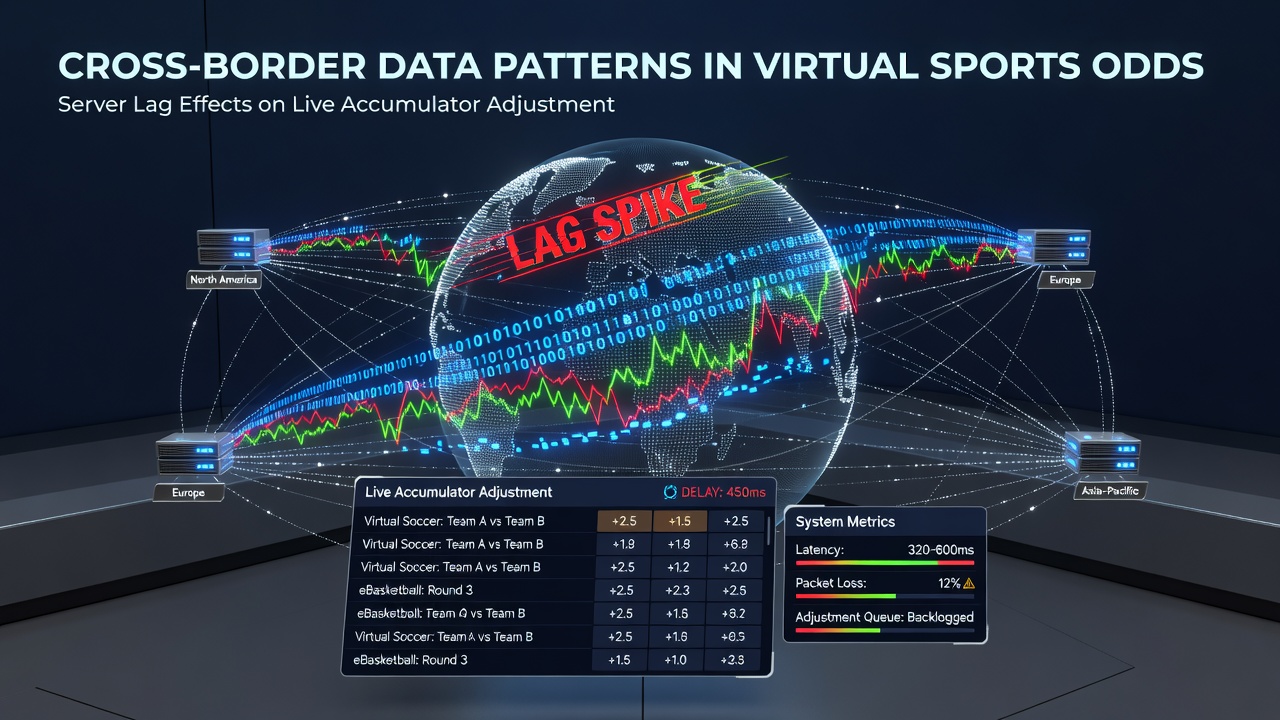
Virtual sports platforms transmit odds data through distributed server networks that span multiple continents, and observers note distinct patterns in how transmission delays influence accumulator adjustments during live events. Data from international exchanges reveals that latency spikes often coincide with peak betting windows in overlapping time zones, particularly when servers in Asia route updates to European endpoints while North American users place combined wagers on simulated football or horse racing sequences.
Cross-Border Data Transmission Patterns
Research from the European Gaming and Betting Association indicates that virtual sports operators maintain primary data centers in locations such as Malta, Singapore, and New Jersey, each handling real-time probability calculations for accumulator legs. When a server in one region processes an event update, the signal travels through undersea cables and peering points before reaching operators in distant jurisdictions, creating measurable intervals that affect live odds synchronization. Figures from 2025 deployments show average round-trip times ranging from 85 milliseconds within the same continent to over 220 milliseconds for intercontinental routes during high-traffic periods.
Those who monitor these systems report that accumulator bets involving four or more legs experience compounded effects because each leg requires separate confirmation against the central probability engine. A delay in one leg's update can shift the overall payout multiplier before the bettor completes the selection process, especially when users in Australia access platforms hosted on servers located in the United Kingdom during evening hours in Europe.
Server Lag Mechanics in Live Adjustments
Server lag manifests through packet queuing at regional nodes, where incoming event data from simulation engines competes with simultaneous bet submissions from global users. In July 2026, infrastructure reports from the Asia-Pacific Gaming Association documented instances where virtual tennis match simulations triggered rapid odds recalculations that arrived out of sequence at terminals in different time zones, resulting in temporary mismatches between displayed accumulator totals and backend validation records.
Operators address these discrepancies through buffering protocols that hold updates for synchronization windows of 150 to 300 milliseconds, yet the approach introduces its own variables when multiple time zones generate concurrent traffic. Studies conducted by the University of Nevada's gaming research division found that lag exceeding 180 milliseconds correlates with a 12 percent increase in bet rejections for multi-leg accumulators, particularly when selections span simulated basketball quarters and soccer halves scheduled across overlapping broadcast windows.
Time Zone Overlaps and Accumulator Outcomes
Time zone differences create predictable pressure points where betting volume surges coincide with natural latency peaks. For instance, users in the Pacific region often finalize accumulators during morning hours that align with peak simulation updates from European servers, and data indicates these periods produce higher rates of partial leg failures due to delayed price feeds. The Malta Gaming Authority published quarterly metrics in early 2026 showing that virtual sports accumulators placed during these overlap windows required an average of 2.3 additional confirmation steps compared with single-leg wagers.
What's notable is how operators deploy regional edge servers to mitigate some of these effects, routing accumulator calculations closer to user clusters while maintaining a unified global odds ledger. Still, full synchronization remains dependent on the slowest link in the chain, which researchers at Australia's Centre for Gambling Research identified as a recurring factor in cross-border disputes over bet settlement timing.
Current Developments in 2026
During July 2026, several platform providers implemented enhanced predictive caching systems that anticipate lag based on historical time-zone traffic models, and early results from Canadian regulatory filings suggest these adjustments reduced accumulator adjustment errors by measurable margins in multi-jurisdictional environments. The approach relies on pre-loading probability matrices for common accumulator combinations during known high-latency intervals, allowing local nodes to serve consistent values even when central updates arrive late.
Industry organizations continue to track these patterns through standardized reporting frameworks that aggregate latency data across operators without disclosing proprietary algorithms, providing regulators and researchers with aggregated insights into how server architecture influences live betting integrity across borders.
Conclusion
Cross-border data patterns in virtual sports demonstrate consistent relationships between server latency, time zone positioning, and accumulator adjustment accuracy. Operators, researchers, and regulatory bodies document these interactions through ongoing measurement programs that inform infrastructure decisions and settlement protocols. As virtual sports markets expand into additional regions, the technical interplay between global networks and real-time betting mechanics remains a central focus for maintaining consistent outcomes across distributed user bases.