RNG Certification Unveiled: The Detailed Processes Behind Fairness in Licensed Online Venues
Written by Katja Simon · Jun 20, 2026
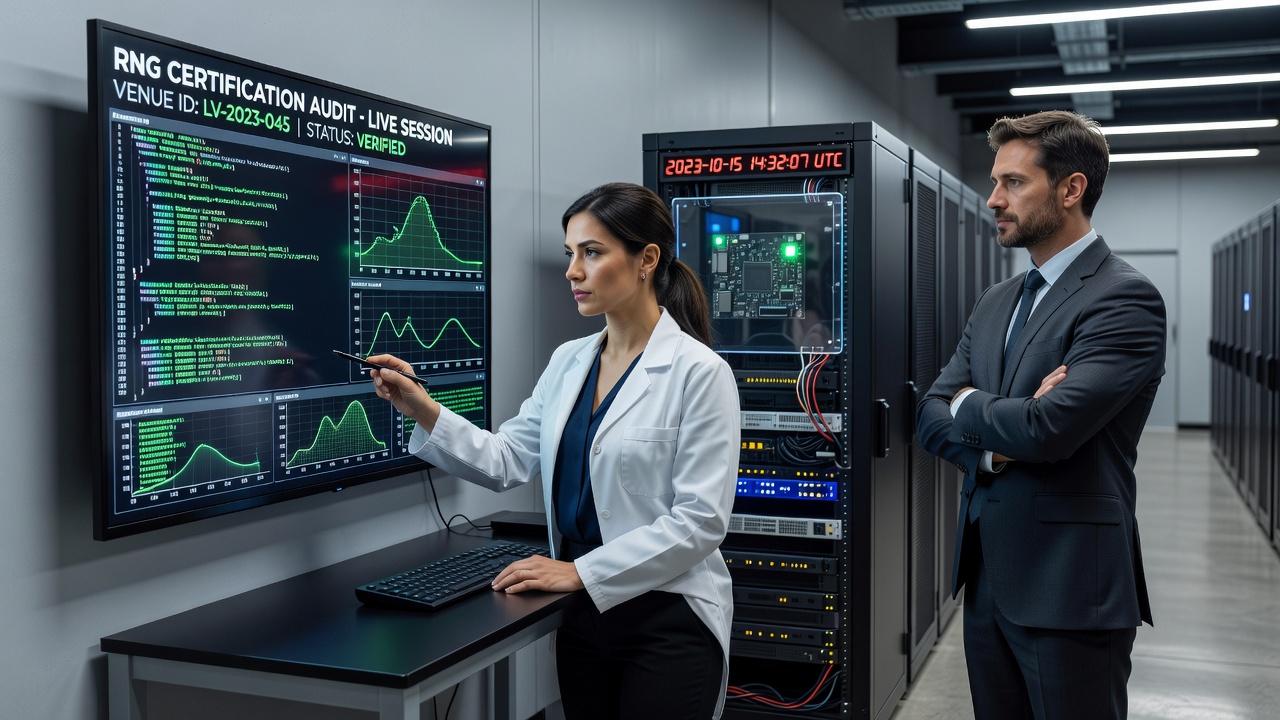
RNG Certification Unveiled: The Detailed Processes Behind Fairness in Licensed Online Venues
Random number generators form the core mechanism that determines outcomes in licensed online venues, and certification processes ensure these systems deliver results without predictable patterns or biases. Observers note that regulators across multiple jurisdictions require independent verification before any platform receives approval to operate, and this verification involves layers of statistical scrutiny along with hardware and software evaluations that extend well beyond basic functionality checks.
Initial Submission and Laboratory Selection
Licensed operators submit detailed documentation about their RNG algorithms to accredited testing facilities, and these facilities operate under strict protocols established by bodies such as the Nevada Gaming Control Board and the Malta Gaming Authority. The selection of a laboratory depends on the jurisdiction where the venue seeks its license, and each lab maintains its own set of approved methodologies that align with regional requirements while also satisfying international benchmarks like those outlined in ISO/IEC 17025 standards.
Technicians begin by examining source code and mathematical models, then they isolate the RNG module to prevent interference from other platform components during evaluation. This separation allows analysts to focus exclusively on sequence generation without external variables influencing results, and the process typically spans several weeks as teams compile baseline data for comparison against expected randomness distributions.
Statistical Testing Protocols
Once isolated, the RNG undergoes batteries of statistical tests that include chi-square analysis, serial correlation checks, and runs tests designed to detect repeating sequences or clustering effects. Researchers apply these methods to millions of generated numbers, and any deviation from theoretical expectations triggers further investigation or outright rejection of the submission. Data from these tests gets recorded in comprehensive reports that operators must retain for regulatory audits, and many jurisdictions now mandate ongoing monitoring rather than one-time approvals.
Hardware-based RNGs receive additional scrutiny because they rely on physical entropy sources such as thermal noise or quantum fluctuations, whereas software-based systems depend on cryptographic seeds and deterministic algorithms. Certification teams evaluate both types using identical statistical frameworks, although hardware variants require environmental testing to confirm stability across temperature variations and power fluctuations that might occur in data centers.
Integration and Live Environment Validation
After initial lab approval, the RNG integrates into the full gaming platform for end-to-end testing that simulates real player sessions and high-volume scenarios. Analysts monitor output during these simulations to ensure that game logic applies results correctly, and any mismatch between generated numbers and displayed outcomes leads to immediate remediation requirements. This phase often incorporates third-party tools that record every transaction for later review by compliance officers.

June 2026 marked an increase in collaborative audits between laboratories in North America and Europe, where shared databases allow cross-referencing of test results from similar RNG implementations. Such cooperation reduces redundant testing while maintaining independent verification standards, and regulators have noted improved consistency in approval timelines as a result. Operators must also demonstrate that their systems include mechanisms for periodic re-seeding and that audit logs remain tamper-evident throughout the operational lifecycle.
Ongoing Compliance and Re-Certification Cycles
Certification does not conclude after initial approval because most regulatory frameworks require annual or biennial re-evaluations to account for software updates and changes in underlying hardware. Labs perform abbreviated test suites during these reviews, focusing on any modified components while still conducting full statistical batteries on core RNG functions. Failure to meet standards during re-certification can result in temporary suspension of operations until corrective measures receive verification.
Industry organizations such as the International Association of Gaming Regulators publish guidelines that help standardize these re-evaluation procedures across borders, and academic studies from institutions including the University of Nevada, Reno have contributed peer-reviewed research on emerging entropy measurement techniques. These resources inform updates to testing methodologies as computational power increases and new attack vectors appear.
Conclusion
The certification landscape continues to evolve with technological advances, yet the fundamental requirement for independent, statistically rigorous validation remains constant across licensed venues. Regulators and laboratories work together to maintain public confidence that outcomes reflect true randomness rather than engineered patterns, and this collaborative framework supports the integrity of digital gaming operations worldwide.