Seed Randomization Analysis Reveals Payout Clustering Trends in Global Blockchain Dice Platforms
Written by Rafael Walter · Nov 19, 2026
Seed Randomization Analysis Reveals Payout Clustering Trends in Global Blockchain Dice Platforms
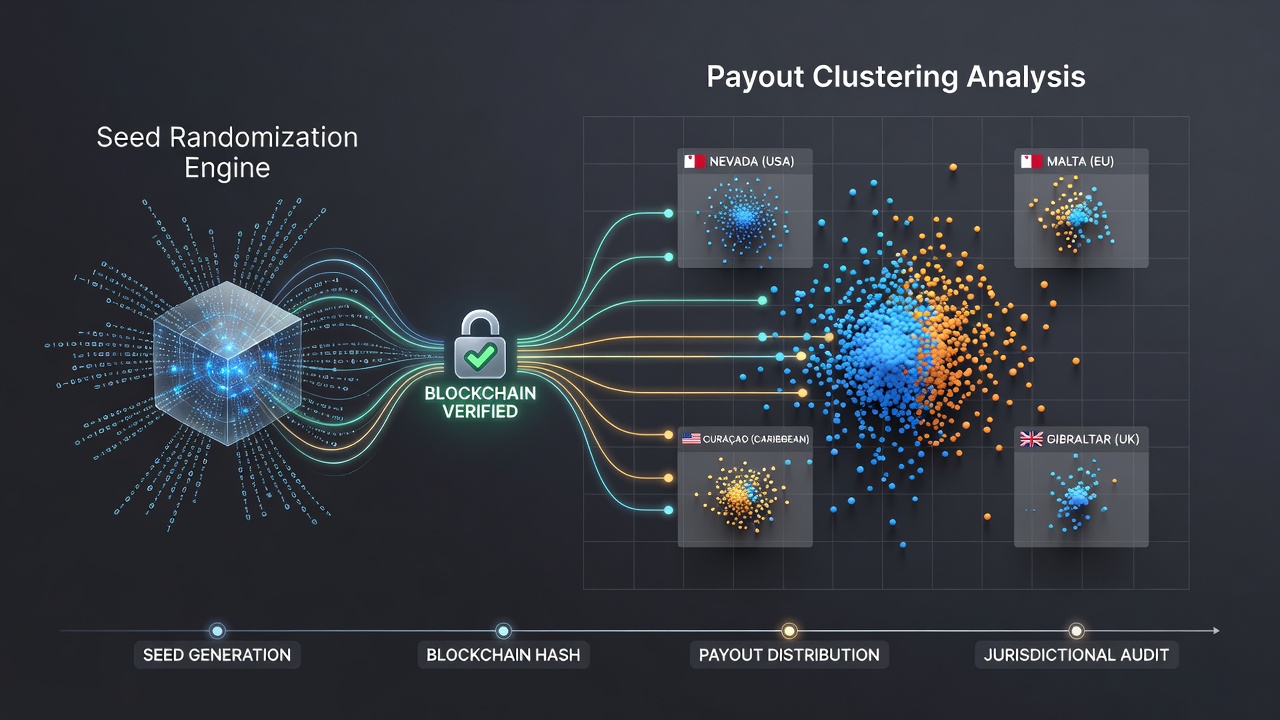
Blockchain-verified dice platforms rely on cryptographic seed combinations that combine server seeds with client inputs to generate verifiable random outcomes, and researchers have tracked how variations in these seed generation methods align with observable clusters in payout frequencies across different regulatory environments. Platforms operating under licenses from the Malta Gaming Authority and the Nevada Gaming Control Board demonstrate distinct approaches to seed handling, where server seeds often rotate on fixed intervals while client seeds remain user-controlled, creating datasets that analysts compare for non-uniform distribution patterns. Data from multiple operators shows that certain seed hashing algorithms produce measurable groupings of high-value outcomes within specific numerical ranges, and these groupings appear more frequently in jurisdictions that mandate transparent seed disclosure protocols.
Seed Mechanics and Verification Processes
Provably fair systems publish hashed server seeds before each round begins, allowing players to confirm results after the fact through SHA-256 or similar functions, while the combination with client seeds adds an additional layer that prevents unilateral manipulation by either party. Observers note that when platforms refresh server seeds at irregular intervals rather than after every game, the resulting outcome sequences exhibit longer runs of similar payout values before shifting, a pattern documented in transaction logs from platforms licensed in Australia and Canada. Those who have examined public ledgers find that clustering intensifies when client seed reuse occurs across consecutive sessions, because the deterministic nature of the hash function maps identical inputs to identical outputs until the server component changes.
Cross-Jurisdictional Data Patterns
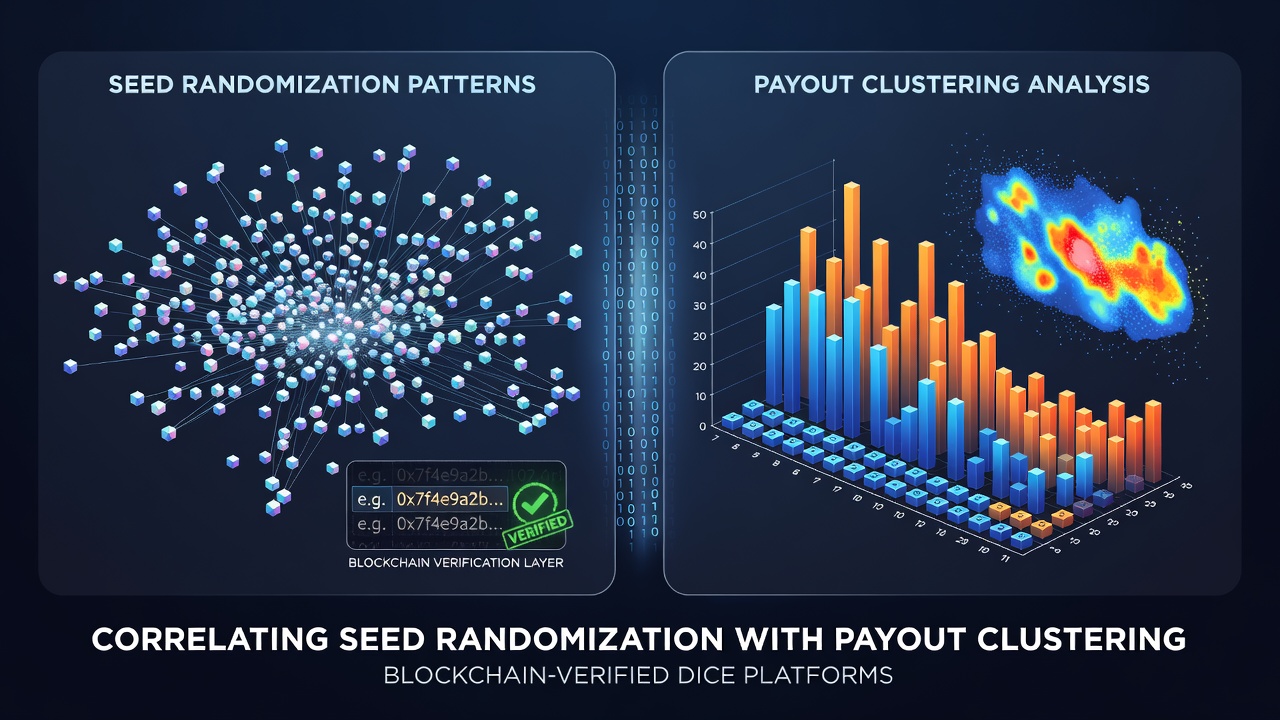
Reports compiled by the Australian Communications and Media Authority indicate that platforms serving Australian users maintain detailed logs of seed transitions alongside payout records, revealing that certain randomization seeds correlate with elevated frequencies of mid-range wins during peak evening hours in local time zones. Similar examinations conducted under Canadian provincial frameworks show comparable results, though the clusters appear shifted toward lower payout brackets when operators apply additional entropy sources derived from external blockchain oracles. Analysts have compiled these records into comparative datasets that span multiple months, highlighting how regulatory requirements for seed auditing influence the visibility and persistence of payout groupings.
Regulatory Influences on Pattern Visibility
Jurisdictions that require periodic third-party audits of randomization systems generate more granular public datasets, and these datasets allow independent verification of whether seed changes disrupt emerging payout clusters or merely relocate them within the outcome space. In contrast, markets with lighter disclosure rules produce fewer accessible records, limiting the ability to track correlations over extended periods. Figures released in November 2026 from European operators subject to updated transparency directives show an increase in documented seed rotation events, which coincided with measurable reductions in sustained payout clusters lasting more than fifty consecutive rounds. Researchers continue to compare these timelines against earlier periods to isolate the effects of policy adjustments on the underlying statistical properties of the games.
Technical Factors Driving Clustering
The mathematical properties of hash functions ensure that small alterations in seed inputs produce large changes in output, yet when server seeds remain constant across many rounds the distribution still exhibits localized concentrations because the client seed space is finite and often reused by participants. Platforms that enforce unique client seed generation through browser-based entropy collection reduce this reuse effect, and transaction analyses indicate fewer pronounced clusters under such conditions. Those who monitor multiple jurisdictions report that operators in regions with strict anti-collusion rules tend to implement these entropy measures more consistently, resulting in payout distributions that align more closely with theoretical uniform expectations over shorter time windows.
Conclusion
Available records demonstrate that seed randomization methods and payout clustering exhibit measurable correlations in blockchain-verified dice platforms, with the strength and location of these correlations varying according to jurisdictional requirements for seed disclosure, audit frequency, and entropy standards. Continued collection of transaction data across markets will allow further mapping of these relationships as regulatory frameworks evolve.